Die Hermeneutik des Matthew Vines
 Christopher Yuan hat für CT Matthew Vines Buch God and the Gay Christian: The Biblical Case in Support of Same-Sex Relationships hilfreich besprochen.
It appears to me that Vines starts with the conclusion that God blesses same-sex relationships and then moves backwards to find evidence. This is not exegesis, but a classic example of eisegesis (reading our own biases into a text). Like Vines, I also came out as a gay man while I was a student. I was a graduate student pursuing a doctorate in dentistry. Unlike Vines, I was not raised in a Christian home. Interestingly, a chaplain gave me a book from a gay-affirming author, John Boswell, claiming that homosexuality is not a sin. Like Vines, I was looking for biblical justification and wanted to prove that the Bible blesses gay relationships. As I read Boswell’s book, the Bible was open next to it, and his assertions did not line up with Scripture. Eventually, I realized that I was wrong—that same-sex romantic relationships are a sin. My years of biblical language study in Bible college and seminary, and doctoral research in sexuality, only strengthened this conclusion. No matter how hard I tried to find biblical justification and no matter whether my same-sex temptations went away or not, God’s word did not change. Years later I found out that the gay-affirming chaplain also recognized his error.
Hier mehr: www.christianitytoday.com.
 Eckart Volant und Renate Volant haben ein Buch über die Entstehung des menschlichen Gewissens geschrieben. Ihre naturalistisch-freudianische Deutung der Gewissensgenese geht ungefähr so:
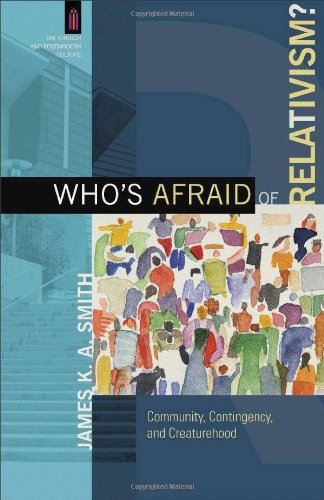 James K.A. Smith vom Calvin College in Grand Rapids (Michigan, USA) ist bekannt für seine Sympathien mit dem postmodernen Denken (siehe meine Kritik
  Ich habe das Buch Thy Word Is Still Truth: Essential Writings on the Doctrine of Scripture from the Reformation to Today bereits