Tim Keller

Tim Keller: Warum Gott?

Keller.jpgAm Wochenende bekam ich die Information vom Brunnen Verlag. Das Buch:

  • Timothy Keller: Warum Gott?: Vernünftiger Glaube oder Irrlicht der Menschheit!, Brunnen Verlag, 2010, 336 S.

wird im August 2010 erscheinen und 19,95 Euro kosten. Ich gratuliere dem Brunnen Verlag zur Veröffentlichung des Bestsellers Reason for God und hoffe, dass das Buch bei vielen Seminaren auf der Lektüreliste landet.

Interview mit Tim Keller

Wie wurde aus dem introvertierten Tim Keller ein erfolgreicher und überzeugender Prediger? Marvin Olasky hat mit Tim Keller darüber gesprochen.

If you just go to towns like New York and spend all your time ministering, you never learn to pastor. You just learn how to do public communication. Ultimately, your preaching will be worse if you do not know how to pastor because you have not gotten involved in the hurts of people’s lives. I learned a lot from Hopewell and if I had not gone there, I would not know a lot of that. It makes me a much better preacher today, way, way better than if I had never been there.

Hier: www.worldmag.com.

Tim Keller zur Erneuerung der Apologetik

Tim Keller fordert eine Erneuerung der christlichen Apologetik:

There is a lot of resistance right now among younger evangelical leaders toward apologetics. We are told we don’t need arguments any more because people aren’t rational. We need loving community instead. But I think this is short-sighted for two reasons. First, Christians in the West will finally be facing what missionaries around the world have faced for years—how to communicate the gospel to Muslims, Buddhists, Hindus, and adherents of various folk religions. All young church leaders should take courses in and read the texts of the other major world religions. They should also study the gospel presentations written by missionaries engaging those religions. Loving community will be extremely important, as it always is, to reach out to neighbors of other faiths, but if they are going to come into the church, they will have many questions that church leaders today need to be able to answer.

Second, there a real vacuum in Western secular thought. When Derrida died I was surprised how many of his former students admitted that High Theory (what evangelicals call ‚post-modernism‘) is seen as a dead end, mainly because it is so relativistic that it provides no basis for political action. And a leading British intellectual like Terry Eagleton in recent lectures at Yale (published as Religion, Faith, and Revolution by Yale Press) savaged the older scientific atheism of Dawkins and Hitchens as equally bankrupt. Eagleton points out that the Enlightenment’s optimism about science and human progress is dead. Serious Western thought is not going back to that, no matter how popular Dawkins‘ books get. But postmodernism cannot produce a basis for human rights or justice either.

Kellers zweite Anmerkung zur »Höheren Theorie« deckt sich mit meinen eigenen Beobachtungen. Im Buch Die Postmoderne habe ich 2006 geschrieben (S. 61):

Während die Postmoderne im Kulturleben und in der Politik westlicher Gesellschaften allgegenwärtig ist, verliert sie im Raum des Denkens allmählich ihren Einfluss. In Frankreich, wo der Dekonstruktivismus seinen Siegeszug begann und Andersdenkende geradezu paralysierte, gibt es bereits brillante Entwürfe gegen die Diktatur des Dialogs.  Seit Jahren sind in den Feuilletons Grabgesänge zu lesen, die erklären, die Postmoderne habe sich in Illusionen verzettelt und sei inzwischen Schnee von gestern .

Hier mehr von Tim Keller zum Thema: theresurgence.com.

Tim Keller

Hier ein guter Trailer über Tim Keller und sein Buch »The Reason for God: Belief in an Age of Skepticism« (mehr hier). Wie ich hörte, soll das Buch noch in diesem Jahr in einem großen deutschsprachigen Verlag erscheinen. Wunderbar!

Keller: Der Gott im Buch »Die Hütte« ist überhaupt nicht Gott

51dhFWnNECL._SL160_.jpgTim Keller hat nun doch noch Die Hütte gelesen und ist ziemlich enttäuscht (Nein, ich will es nicht lesen.):

Anyone who is strongly influenced by the imaginative world of The Shack will be totally unprepared for the far more multi-dimensional and complex God that you actually meet when you read the Bible. In the prophets the reader will find a God who is constantly condemning and vowing judgment on his enemies, while the Persons of the Triune-God of The Shack repeatedly deny that sin is any offense to them. The reader of Psalm 119 is filled with delight at God’s statutes, decrees, and laws, yet the God of The Shack insists that he doesn’t give us any rules or even have any expectations of human beings. All he wants is relationship. The reader of the lives of Abraham, Jacob, Moses, and Isaiah will learn that the holiness of God makes his immediate presence dangerous or fatal to us. Someone may counter (as Young seems to do, on p.192) that because of Jesus, God is now only a God of love, making all talk of holiness, wrath, and law obsolete. But when John, one of Jesus’ closest friends, long after the crucifixion sees the risen Christ in person on the isle of Patmos, John ‘fell at his feet as dead.’ (Rev.1:17.) The Shack effectively deconstructs the holiness and transcendence of God. It is simply not there. In its place is unconditional love, period. The God of The Shack has none of the balance and complexity of the Biblical God. Half a God is not God at all.

Hier seine Eindrücke: thegospelcoalition.org.

Predigtarchiv von Tim Keller geöffnet

Die Redeemer Presbyterian Church in New York City (U.S.A.) hat anlässlich ihres 20-jährigen Jubiläums das Predigtarchiv geöffnet. So können derzeit 150 Predigten und Vorträge von Dr. Tim Keller gehört oder als mp3-Datei herunter geladen werden.

Ich habe mir gerade Kellers Predigt über Galater 2,4–16 angehört und kann sie sehr empfehlen: Absolutism: Don’t we all have to find truth for ourselves?

Hier das Predigtarchiv: sermons2.redeemer.com.

American Idols

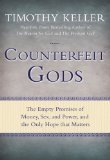
51WUhNgBu7L._SL160_.jpgTim Keller erklärt in seinem neuen Buch, warum Geld, Sex und Macht uns so schnell vereinnahmen können. Sarah Pulliam Bailey hat für CT über Counterfeit Gods gesprochen und gefragt, wie man herausfinden kann, welche »Götzen« man verehrt. Keller meint, dass die Tagträume viel über unsere verborgenen Wünsche verraten:

Look at your daydreams. When you don’t have to think about something, like when you are waiting for the bus, where does your mind love to rest? Or, look at where you spend your money most effortlessly. Also, if you take your most uncontrolled emotions or the guilt that you can’t get rid of, you’ll find your idols at the bottom. Whenever I hear someone say, »I know God forgives me, but I can’t forgive myself,« it means that person has something that is more important than God, because God forgives them. If you look at your greatest nightmare—if something were to happen that would make you feel you had no reason to live—that’s a god.

Das Buch:

  • Tim Keller: Counterfeit Gods: The Empty Promises of Money, Sex, and Power, and the Only Hope that Matters, Dutton Adult, October 2009, 240 S., ca. 14,00 Euro

gibt es hier:

Einkaufsmöglichkeit

Tim Keller: Falsche Götter

51G1PN9DwzL._SL160_.jpgWährend der Brunnen Verlag erfreulicherweise an der Übersetzung des Buches The Reason for God: Belief in an Age of Skepticism arbeitet und wahrscheinlich 2010 herausgeben wird, erscheint im Oktober 2009 ein neues Buch von Tim Keller:

beschäftigt sich mit den leeren Versprechungen der Götter von heute: Geld, Sex und Macht.

Das Buch kann vorbestellt werden:

Einkaufsmöglichkeit

VD: HB

Predigtvorbereitung à la Tim Keller

Tim Keller, Pastor der Redeemer Presbyterian Church in Manhatten (U.S.A.), investiert ungefähr 14–16 Stunden pro Woche in die Predigtvorbereitung. Für eine Sonntagspredigt schaut die Vorbereitung folgendermaßen aus:

  1. Zwei Wochen vor dem Predigttermin: Vier Stunden Bibelstudium und Exegese sowie Erstellung einer Gliederung.
  2. Drei Tage vor dem Predigttermin: Vier Stunden Aktualisierung von »Was sagt der Text?« zu »Was bedeutet das für mich« (also Verbindungen zum Leben herstellen).
  3. Einen Tag vor dem Predigttermine: Sechs Stunden Predigt ausarbeiten und Notizen niederschreiben.
  4. Am Sonntag: Vier Mal hintereinander (im Gottesdienst) die Predigt halten.

Hier kann man ihn selbst hören:

Neugierig, wie die Predigtnotizen von Tim Keller aussehen? Kein Problem, hier ist ein Beispiel: keller_ms.pdf.

VD: TBFP

Nach oben scrollen
DSGVO Cookie Consent mit Real Cookie Banner