Michael Horton

Interview mit Michael Horton

John Starke hat mit Michael Horton über seine Systematische Theologie gesprochen. Horton über seine Intention:

God’s people have profited tremendously from these contemporary systems. I wanted to offer a summary of the Christian faith from a confessional Reformed perspective, interacting with contemporary biblical scholarship and some of the more recent questions that have been raised both within and outside of the tradition. Robert Reymond’s fine work explores the richness of Reformed theology, though I have some differences that I mention, mostly in a footnote here or there. But, like Reymond, I wanted to show how Reformed teaching holds together, not just on some topics (like sin and grace), but as an attempt to articulate the broader system of faith and practice.

Mehr Informationen über sein neustes Buch gibt es hier. Das vollständige Interview gibt es bei der TGC: tgcreviews.com.

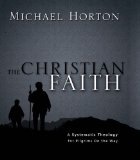
Der christliche Glaube – Systematische Theologie von M. Horton

41hpuOkrM7L._SL160_.jpgIch weiß nicht, ob so ein ›prophetischer‹ Satz von Zondervan über Michael Hortons Systematische Theology klug ist.

Michael Horton’s highly anticipated The Christian Faith represents his magnum opus and will be viewed as one of—if not the—most important systematic theologies since Louis Berkhof wrote his in 1932.

Das Buch ist jedenfalls gesetzt und wird Ende Januar bis Anfang Februar erscheinen. Hier schon einmal ein Blick auf das Inhaltsverzeichnis und die ersten Seiten: 0310286042_samptxt.pdf.

Horton: Die Allgenugsamkeit der Schrift

Michael Horton hat für die aktuelle Ausgabe von Mordern Reformation einen Artikel über die Allgenugsamkeit der Heiligen Schrift geschrieben. Der Beitrag ist derzeit auf der Internetseite der Zeitschrift einsehbar. Horton schreibt:

However, a genuinely evangelical approach maintains that Scripture is sufficient, not just because it alone is divinely inspired (though that is true) but because these sixty-six books that form our Christian canon provide everything God has deemed sufficient for revealing his law and his gospel. Speculation will not help us find God, but will only lead us to some idol we have created in our own image. We may feel more secure in our autonomy (self-rule) when we pretend that our own inner voice of reason, spirituality, or experience is the voice of the Spirit. We may be excited about a new program for transforming our nation, our families, and our own lives, but there is no power of God unto salvation in our own agendas and efforts. We can find all sorts of practical advice for our daily lives outside of the Bible. The evangelical view of sola scriptura does not mean that we do not need anything but the Bible for math, science, the arts, politics, or even daily principles for a host of decisions we make in our callings. What an evangelical (i.e., Reformational as opposed to fundamentalist) view does mean by sola scriptura is that everything we need for salvation and true worship is found in the Scriptures. The church has authority only to pass on what it has heard; it is the servant, not the Lord, of the covenant of grace.

The sufficiency of Scripture recognizes that we have everything we need for salvation and life in the canonical Word. „Salvation is of the LORD“ (Jon. 2:9). It does not come from within us but to us from heaven, as the rescue operation of the triune God. And the form in which this gospel comes normatively to us here and now is Scripture. Even preaching is the Word of God only insofar as it proclaims the commands and promises issued by these sacred texts. The Bible is not the product of spiritual geniuses, sensitive gurus, and religious sages who can help us find God; it is the revelation from the God who seeks and saves the lost even while they are running from him.

Hier mehr: www.modernreformation.org.
Christus, Reich Gottes und die Kultur

Videomitschnitte der Konferenz »Christ, Kingdom & Culture«, veranstaltet vom Westminster Seminar in Kalifornien (U.S.A.), können inzwischen herunter geladen. Hier die Links zu den Vorträgen:

Christus in der Mitte

Das christliche Magazin Christianity Today (CT) hat ein Interview mit Michael Horton publiziert. Horten erklärt dort allgemeinverständlich, wie er sich ein vom Evangelium getriebenes Leben vorstellt:

Become a recipient again. Mary and Martha, the two sisters and disciples of Jesus, had different relationships with Jesus. Martha busied herself with many tasks, and she was getting mad at Mary for making her do all the work. Mary was sitting at Jesus‘ feet, learning from him. Jesus rebuked Martha for criticizing her sister and said Mary had chosen the better part.
First and foremost, disciples are recipients of Jesus Christ’s teaching. His teachings are really teachings concerning his person and his work. He has accomplished our salvation. He has accomplished our redemption. So first, allow the gospel to soak in again.
Then allow the imperatives that arise out of that to be our reasonable service. Instead of trying to live the victorious Christian life, instead of trying to get into God’s favor by following tips and formulas, let’s receive the gospel and then follow the commands of God’s law when it comes to directives. Then our sailboat is perfectly equipped. Now we have the wind in our sails—the gospel—and we also have God’s own wisdom to guide us in that gospel-driven life.

Hier das vollständige Interview: www.christianitytoday.com.

Michael Horton analysiert N.T. Wright’s Rechtfertigungslehre

Michael Horton, Professor für Systematische Theologie am Westminster Seminary in Kalifornien (U.S.A.), hat sich in einer Serie mit N.T. Wright’s Buch Justification: God’s Plan and Paul’s Vision beschäftigt. Trevin Wax hat freundlicherweise die einzelnen Artikel zusammengestellt:

  1. Introduction
  2. Justification and God’s single plan: The Covenant and History
  3. Justification and God’s people
  4. Justification and God’s Righteousness: Imputation and Future Hope
  5. Justification and God’s Righteousness: Covenant and Eschatology
  6. Justification, Faith, and Faithfulness: The Works of the Law
  7. Justification and the Testimony of Paul
  8. Justification and Romans
  9. “Works of the Law” – Soteriology and Ecclesiology
  10. Conclusion

Eine Tabelle, die die unterschiedlichen Positionen von N.T. Wright und John Piper aufführt, ist in der aktuellen Ausgabe von Glauben und Denken heute enthalten.

Nachtrag: Inzwischen gibt es die Analyse von M. Horton auch zusammengefasst als PDF-Datei: www.whitehorseinn.org.

Lieben wir die Gemeinde?

Michael Horten hat eine neue Blogserie über die Kennzeichen der Gemeinde eröffnet. In seinem ersten Beitrag kritisiert er, dass überkonfessionelle Organisationen zunehmend einen quasi kirchlichen Status erhalten.

In The Courage to be Protestant, David Wells observes that parachurch ministries are increasingly replacing the church itself. The question is whether evangelicalism itself has become a threat to actual churches. Many Christians today believe that going to a Christian concert, evangelistic event, or conference is equivalent to the corporate gathering of the covenant community each Lord’s Day. As George Barna argues in The Revolutionaries (Tyndale, 2005), most Christians will soon (he hopes) receive their spiritual resources on-line and not even find it necessary to attend, much less join, a local church. Stunned by the revelation that many of those most involved were the most dissatisfied with their spiritual growth, Willow Creek Community Church’s self-study, published as Reveal, concluded that believers outgrow the church. Although the respondents actually said that they thought the weak diet was responsible for their poor spiritual health, the leadership concluded that they need to work harder to make people fend for themselves as »self-feeders« and be less dependent on the ministry of the church.

Hier der Beitrag: www.whitehorseinn.org.

Michael Horton: Die fünf besten Calvin-Bücher

Professor Michael Horton hat der Zeitschrift CT folgende fünf Bücher von bzw. über Johannes Calvin empfohlen:

  1. Johannes Calvin: Unterricht in der christlichen Religion – Institutio Christianae
  2. W. Robert Godfrey: John Calvin: Pilgrim and Pastor
  3. T.H.L. Parker: John Calvin: A Biography (dt. Johannes Calvin – Ein großer Reformator)
  4. Richard A. Muller: The Unaccommodated Calvin
  5. J. Todd Billings: Calvin, Participation, and the Gift

Hier kurze Erläuterungen: www.christianitytoday.com.

Die Albernheit der Kirche

christless-christianity.jpgTim Challies hat das Buch Christless Christianity von Michael Horton gelesen und seine Eindrücke publiziert. Hier sein Resümee:

Through all of this I’d suggest the most important statement in the book may just be this: »It is not heresy as much as silliness that is killing us softly.« This is where the book may be most useful for the conservative Christians who are the audience most likely to read it. All of us can fall into silliness without tossing aside the gospel. We can hold fast to Christian theology, even while allowing silliness and levity to pervade the very fabric of our church. A once-serious institution can become overrun by programs and purposes that slowly erode the gravity and simplicity of the church’s unique calling. This book is a call for the church to return to its biblical foundations and to remain true to those convictions. It is a clarion call and one that Christians would do well to heed. Christless Christianity is an excellent and timely book and one I would not hesitate to recommend to any Christian.

Die ganze Rezension gibt es hier: www.challies.com.

Nach oben scrollen
DSGVO Cookie Consent mit Real Cookie Banner