Bücher

Puritanische Lust

Edmund Leiters schreibt in seinem bemerkenswerten Buch:

Zumindest in einer Hinsicht hat sich Weber [gemeint ist Max Weber] völlig getäuscht. Der Puritanismus ist zutiefst von einer Ethik beseelt, die weltbejahend ist. In ihrer Philosophie der Ehe, eines der wichtigsten Lebensbereiche für den Puritanismus, fordern Prediger und Theologen die spontane Freude, die sexuelle Befriedigung und das Vergnügen aneinander. Sie bejahen den inneren Wert des Vergnügens und der Erquickung, die Ehegatten einander spenden können. Aus ihrer Sicht müssen diese Freuden nicht durch einen weitergehenden spirituellen Zweck gerechtfertigt werden, wenngleich die Ehe für sie spirituelle Ziele besitzt; die Freuden der Ehe sind Güter an sich, die dem natürlichen menschlichen Bedürfnis nach Gesellschaft und Liebe entsprechen. Der Puritanismus kann daher nicht als eine durch und durch asketische Religion gelten.

Recht hat Weber dagegen, was die Forderung der Puritaner nach gründlicher Selbstdisziplin angeht. Puritanische Prediger forderten in allen Lebensbereichen – Ehe, Arbeit, Politik, Familie, Krieg – eine auf die Schaffung konstanter und verläßlicher Motive gerichtete, systematische Selbstdisziplin. Dies galt ebenso für die Liebe zum Ehegatten wie für die beim Genuß von Reichtum und irdischen Gütern zu übende Zurückhaltung. Der Ruf nach moralischer Beständigkeit hatte in der Tat immer dann asketische Konsequenzen, wenn man der Meinung war, daß die Freuden der Welt einer Preisgabe der Selbstdisziplin und der moralischen Stetigkeit gleichkamen. Die Hauptströmung des Puritanismus sah in der ehelichen Sexualität keine Gefahr für die moralische Beständigkeit; vielmehr sah sie in ihr eine bemerkenswerte und gelungene Harmonie der sinnlichen, moralischen und spirituellen Bande.

Kinder bringen nur noch emotionale Rendite

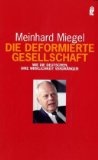
318XJZHBC3L._SL160_.jpgMeinhard Miegel schreibt in seinem Buch Die deformierte Gesellschaft: Wie die Deutschen ihre Wirklichkeit verdrängen (Berlin-München 2002, S. 21–22):

Nüchtern betrachtet, ist die niedrige Geburtenrate jedoch darauf zurückzuführen, dass Kinder in Wohlstands- und erwerbsarbeitsorientierten, kollektiv rundum abgesicherten und hochgradig individualistischen Gesellschaften oft weniger attraktiv sind als andere Lebensoptionen … Die Investition in Kinder rentiert sich allenfalls noch emotional. Der wirtschaftliche Aufwand, den sie erfordern, wird gegenüber den Eltern nur selten zum Ausgleich gebracht. Ihre Wirtschaftskraft ist fast vollständig vergemeinschaftet … Mitunter mag die Entscheidung zwischen den Optionen konfliktträchtig und schwierig sein. Die Lebenswirklichkeit zeigt jedoch, dass sie nicht mehr mit einer gewissen Selbstverständlichkeit zugunsten von Kindern fällt. Hierüber sollte es keine Illusionen geben: Die Kinderarmut individualistischer Wohlstandsgesellschaften ist nicht die Folge unbeabsichtigter Fehlentwicklungen, die sich durch zusätzliche Kindergartenplätze oder höhere steuerliche Freibeträge beheben ließen. Vielmehr ist sie Ausdruck des Wesenskerns dieser Gesellschaft.

VD: Den Hinweis auf nachfolgendes Zitat verdanke ich Jürgen Liminski vom Institut für Demographie, Allgemeinwohl und Familie.

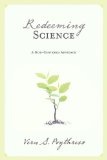
Redeeming Science von Vern Poythress

3128VMKF0QL._SL160_.jpgDas Buch:

kann hier gratis als PDF-Datei herunter geladen werden: NAllPoythressRedeemingScience20061017.pdf.

Professor John Frame schreibt über das Buch:

With doctorates in both New Testament and mathematics, and with a solid commitment to orthodox Reformed theology, Vern Poythress is uniquely qualified to write on the theology of science. Further, he is one of the most insightful theologians writing today. As you read this book, you will be amazed at the ways in which a biblical perspective illumines the work of science. Poythress deals, of course, with all the traditional science-Bible issues, like the days of Genesis. But he also shows that a biblical worldview is essential to the work of science itself, for scientific law can be nothing other than the law of the God of Scripture. This is by far the most important book you can read on this subject. I recommend it without reservation.

Stephen Meyer, Autor des Buches Signature in the Cell, schreibt:

Poythress shows how a proper understanding of biblical theology makes possible not just one but many credible harmonizations of biblical and scientific truth. Along the way, he provides an insightful defense of the theory of intelligent design as a viable scientific research program. His examination of the mathematical beauty inherent in the universe gives yet another compelling reason to acknowledge the wisdom and design that lie behind physical reality.

Bibel-Lesepläne

Wie wäre es denn mit einer regelmäßigen Bibellese im Jahr 2010? Der Crossway Verlag hat 10 Pläne zum Bibellesen herausgegeben. Sie haben unterschiedliche Schwerpunkte und können in verschiedenen Formaten (sogar iCal) aus dem Internet geladen werden.

Hier: www.esv.org.

Paulus, der Missionar

51ASuwqQDrL._SL160_.jpg

Eckhard J. Schnabel, früher Dozent an der FTA in Gießen (heute FTH) und derzeit Professor für Neues Testament an der Trinity Evangelical Divinity School, hat ein faszinierendes Buch über Paulus geschrieben.

Guy Davies schreibt in seiner Rezension:

The author divides his treatment into six main sections. He begins with a consideration of ‘The Missionary Work of the Apostle Paul’ describing the apostle’s many missionary journeys from the time of his conversion until he was finally imprisoned and then martyred in Rome. It is often suggested that Paul underwent four missionary journeys. Schnabel challenges the traditional view, identifying fifteen distinct periods of mission. Then we come to ‘The Missionary Task According to Paul’s Letters’, where the author surveys Paul’s own understanding of the task of mission, giving careful and detailed attention his epistles. In ‘The Missionary Message of the Apostle Paul’ the writer skilfully unpacks the content of Paul’s gospel preaching, which focused on confronting Jew and Gentile alike with the good news of the death and resurrection of Jesus Christ. Consideration is given to ‘The Missionary Goals of the Apostle Paul’. Paul aimed at preaching the gospel so that sinners would be saved and gathered into class-defying, multi-ethnic churches, where they might be nurtured in the faith and trained for mission. The question of how the apostle went about doing all this is faced in ‘The Missionary Methods of the Apostle Paul’. The writer discusses how Paul decided which areas to evangelise, the types of building he used for mission and his manner of public speaking. Paul’s preaching centered on the sacrificial death and mighty resurrection of Jesus Christ. Both Jews and Gentiles found his message deeply offensive and objectionable. The only explanation for Paul’s missionary success is the convincing power of the Holy Spirit upon his preaching.

In the last prophetic section Schnabel seeks to apply the lessons of Paul the Missionary to ‘The Task of Missionary Work in the Twenty-First Century’. He argues that the trend towards targeting of homogeneous people groups is a contradiction of the New Testament vision of the church as God’s multi-ethnic community of people united to Christ and indwelt by the Spirit. Drawing on the work of David Wells (here), he also critiques “Seeker Sensitive” and “Purpose Driven” approaches to mission, which rely too much on technique and water down the gospel for the sake of “cultural relevance”. Schnabel’s prescription is that we need to return to the gospel centred, Spirit empowered approach of Paul, ‘The missionaries, teachers and preachers of the church are and remain sinners saved by God’s grace and whose “success” – evaluated from the eternal perspective of God’s Day of Judgement – is the result of the power of the Spirit of God, who honours their faithfulness to the truth of the gospel of the crucified Jesus Christ.” (p. 418).

The book is packed with a wealth of fascinating information on Paul’s missionary travels and gives an acute analysis of his theology. Indeed what is so impressive about this volume is Schnabel’s commitment to the primacy of theology over and against the „can do“ pragmatism that so often characterizes evangelical approaches to mission. It also struck me that while the writer takes account of the women who helped Paul in his evangelistic work, the leading figures in New Testament mission were men. The main method of mission was primarily the preaching of the gospel to all who would listen, which is a male task according to the New Testament. While women have done (and are doing) sterling work on the mission field, we need to pray that the Lord of the harvest will raise up suitably gifted men to take the good news of Jesus to the nations.

Das Buch:

  • Eckhard J. Schnabel: Paul the Missionary: Realities, Strategies and Methods, Inter Varsity, 2008, 518 S.

kann hier bestellt werden:

Einkaufsmöglichkeit

The Meaning of the Pentateuch

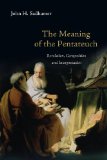
419e78r2soL._SL160_.jpgWer noch ein Weihnachtsgeschenk für begeisterte Leser der 5 Bücher Mose sucht, sollte sich:

  • John H. Sailhamer: The Meaning of the Pentateuch: Revelation, Composition and Interpretation, Inter Varsity, 610 S.

genauer anschauen.

Das Buch ist noch nicht lange auf dem Mark, genießt aber schon einen exzellenten Ruf. Eugene H. Merrill schreibt:

For years John Sailhamer has been pressing toward a comprehensive work on the Pentateuch, preparing the way with such works as his The Pentateuch as Narrative and a host of periodical publications on the subject. At last the magnum opus has appeared under the title The Meaning of the Pentateuch: Revelation, Composition and Interpretation. In typical Sailhamer fashion, he has left no stones unturned in any language necessary to get to primary and secondary sources, while at the same time offering fresh insights into the biblical texts and compelling invitations to the reader to view them in more holistic and integrative ways. Careful reading of the book will inevitably call for a reexamination of the issue of the Pentateuch’s antiquity and its deliberate compositional strategy, a reassessment that will help to rehabilitate Torah as not the end product of Judaism but as the foundation of Israelite faith and practice.

Hier kann es bestellt werden:

Einkaufsmöglichkeit

Wie gehts weiter mit Web 2.0?

Es mehren sich die Anzeichen, dass das viel gelobte Mitmach-Netz in eine Akzeptanzkrise geraten ist. Wikipedia leidet unter Autorenschwund, kritische Studien untergraben das Vertrauen in die sozialen Netzwerke.

Es mehren sich die Hinweise darauf, dass das zumal von seinen Aktivposten gefeierte Web 2.0 in eine Akzeptanz-Krise geraten ist. Grund für den ruchbaren Niedergang des Mitmach-Netzes ist nicht das kulturpessimistische Lamento des »FAZ«-Herausgebers Frank Schirrmacher, der in seinem neuen Buch »Payback« das Internet generell zeiht, es mache süchtig, sei der Konzentration abträglich und zermansche das Hirn wie sonst nur harte Drogen. Grund für die miese Sozialprognose, die virtuellen Netzwerken gestellt wird, sind vielmehr Zahlen, die vom Niedergang interaktiver Beteiligung künden.So hat der englischsprachige Ableger des Online-Lexikons Wikipedia, Inbegriff und Archetyp der Web-2.0-Utopie, im ersten Quartal dieses Jahres fast 50 000 seiner ehrenamtlichen Autoren verloren, wie eine Erhebung des Spaniers Felipe Ortega belegt. Das sind etwa zehn Mal mehr Abgänge als im Vorjahr. Grund für den Schwund ist laut Ortega vor allem das für Novizen kaum mehr zu durchschauende Regeldickicht.

Hier der Artikel von Hendrik Werner: www.welt.de.

Interview mit Justin Taylor

Justin-Taylor-721591-199x300.jpgHinter dem erfolgreichen Projekt ESV Study Bibel steckt natürlich ein großartiges Team. Einer hat sich allerdings besonders engangiert: Der Koordinator für die Herausgabe der Studienbibel Justin Taylor vom Crossway Verlag.

Trevin Wax hat sich mit ihm unterhalten: trevinwax.com.

P.S. Die ESVSB ist ein wunderschönes Weihnachtsgeschenk (ich jedenfalls habe mich 2008 riesig gefreut) und kann hier bestellt werden: theoblog.de.

Nach oben scrollen
DSGVO Cookie Consent mit Real Cookie Banner