Suchergebnisse für: schaeffer

Vorlesungen mit Francis Schaeffer aufgetaucht

FrancisSchaefferStudies.org, ein Projekt, das die Erschließung des Werkes von Francis und Edith Schaeffer fördert, teilte am 13. September 2013 mit, dass sie an der Digitalisierung von Videoaufnahmen mit Vorlesungen von Francis Schaeffer arbeiten. Es handelt sich um Aufnahmen aus dem Jahr 1983 und 1984, also um Vorträge aus der letzten Schaffensperiode Schaeffers.

Die Themen:

  • Introduction to L’Abri – Dr. Schaeffer and Susan Macaulay (daughter)
  • Names and Issues – Dr Schaeffer
  • Who Is For Peace? – Dr. Schaeffer
  • It is Your Life Involved – Dr. Schaeffer
  • Common Sense Living (Nehemiah) – Edith Schaeffer
  • Apologetics – Dr. Schaeffer
  • Discussion on The Great Evangelical Disaster (Book) – Part 1
  • Discussion on The Great Evangelical Disaster (Book) – Part 2
  • Conference Discussions / Dr. Schaeffer’s Last Address – Part 1
  • Conference Discussions / Dr. Schaeffer’s Last Address – Part2

Die digitalisierten Videos sollen etappenweise ab Winter 2013 veröffentlich werden. Weiter Informationen hier: francisschaefferstudies.blogspot.de.

Francis Schaeffer als bleibende Herausforderung

Chuck Colson und Timothy George behaupten in ihrem CT-Artikel über Francis Schaeffer: Mit lasergenauer Präzision benennt Schaeffer das Grundproblem unserer Zeit: die Ausklammerung der Wahrheitsfrage.

Many of us have tried to pick up pieces of Schaeffer’s legacy. But no one has brought charity and clarity together the way he did. No one has spoken with the compassion, precision, and, yes, fierceness that Schaeffer brought to the task. Some say today that the church should take a sabbatical from speaking to the culture at large. That would be a grave mistake. The alternative to winsomely engaging the culture isn’t blissful withdrawal: it is further subjugation to what Pope Benedict XVI has called the „dictatorship of relativism.“ Schaeffer taught us that the undermining of truth leads to the loss of human rights, including liberty and life itself. The title of this column is an apt description of Schaeffer’s legacy: contra mundum, against the world. Schaeffer swam against the stream and his words were prophetic, sharp, sometimes cutting. But Schaeffer was against the world in order to be for the world, the world God made and for which Christ died. We can hardly celebrate his legacy in any other way but to hear and to heed.

Hier: www.christianitytoday.com.

Riddlebargers Vorlesung über Francis Schaeffer

Hier eine Vorlesung von Kim Riddlebarger über Francis Schaeffer:

  1. The Life and Significance of Francis Schaeffer


  1. Francis Schaeffer: Sources of His Thought (Old Princeton)


  1. Francis Schaeffer: Sources of His Thought (Van Til)


  1. Francis Schaeffer: Apologetic Methodology (epistemology)


  1. Francis Schaeffer: Taking the Roof Off


  1. Francis Schaeffer — A Critical Evaluation


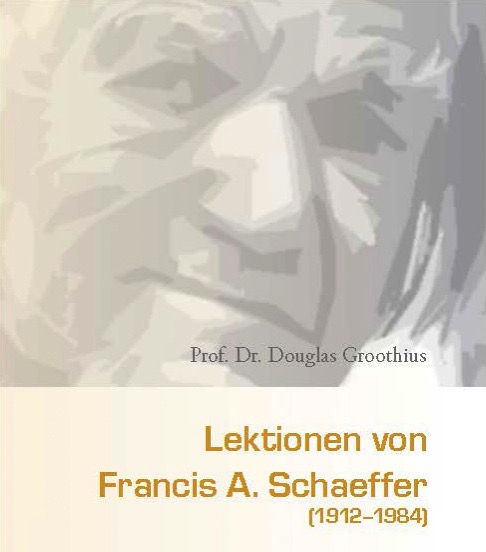
Lektionen von Francis A. Schaeffer

Schaeffer Lektionen TitelIm Jahr 2008 hat Professor Douglas Groothius in Glauben und Denken heute einen Artikel über Francis Schaeffer publiziert. Groothius hat sieben Lektionen aus dem Leben seines Lehrers herausgestellt:

  1. Schaeffer besaß eine große Leidenschaft für Gott und die Wahrheit.
  2. Schaeffer war um die Verlorenheit des modernen Menschen sehr besorgt.
  3. Nichtchristen waren für diesen Mann Gottes keine „Objekte“ sondern Menschen, die das Bild Gottes in sich trugen und die ohne Evangelium von Jesus Christus keine Hoffnung hatten.
  4. Schaeffer war ein kompromissloser Universalist in der Sache Christi. Schaeffer rührte nicht die Werbetrommel in eigener Sache, sondern suchte im Leben und im Dienst vor allem Gott.
  5. Schaeffer liebte Kunst, konnte gute Ästhetik auch in nichtchristlicher (oder antichristlicher) Kunst erkennen und hatte christlichen Künstlern den Auftrag und die Vision für künstlerische Betätigung gegeben.
  6. Schaeffer verfügte über gründliche Fachkenntnisse und hatte ein große Liebe zur Heiligen Schrift.
  7. Für diesen Mann war die Bibel eine lebendige Realität. Schaeffer war „ein Mann der Reformation“, der nichtsdestotrotz mit seinem Calvinismus weder schulmeisterlich noch stolz auftrat.

Der Artikel „Lektionen von Francis A. Schaeffer“ kann hier heruntergeladen werden: Schaeffer_Lektionen.pdf.

Interview mit Francis Schaeffer

So mancher wird sich fragen: „Wie kann es sein, dass Francis Schaeffer ausgerechnet bei „Pat“ Robertson im TV-Studio erschienen ist?“ Wie auch immer, hier ist das Gespräch zwischen Robertson und Schaeffer aus dem Jahre 1982:

Francis Schaeffer: Großevangelisationen

Kurz vor seinem Heimgang sprach Francis Schaeffer noch einmal bei einer Fragen & Antworten-Runde zu dem Thema „Evangelisation“. Kurz: Schaeffer war nicht grundsätzlich gegen Großevangelisationen. Aber er legte sehr viel Wert darauf, dass der Inhalt des Evangeliums klar verkündigt wird (also keine emotionsgeladene Verkündigung ohne Inhalt). In unserer Zeit brauchen wir – so Schaeffer – viele persönliche Gespräche, da wir die die Botschaft des Evangeliums gründlich erklären müssen. Er legte viel Wert auf die „wahre Wahrheit“ des Glaubens. Eine typische Formulierung von ihm lautet: Es gibt nur einen Grund, Christ zu sein: die Botschaft des christlichen Glaubens ist wahr.

John Frame und Francis Schaeffer

Steve Scrivener hat Kommentare von John Frame über Francis Schaeffer zusammengestellt. Frame sagte über Schaeffers Einfluss auf sein Leben:

I only met Schaeffer maybe three or four times in my life. I spent a night at his Chalet in Switzerland in 1960, but he was away in the states at the time. I hoped to spend more time there, but God never opened the door. Nevertheless, reports of God’s work at L’Abri stirred my soul, and I sought any opportunity to read his letters and, when later available, his books.

Early in my study at Westminster [Theological Seminary ( Philadelphia ) in 1961–64], I read Schaeffer’s article »A Review of a Review,« published in The Bible Today. Schaeffer had studied both with Van Til and with the editor of The Bible Today, J. Oliver Buswell. Buswell had been very critical of Van Til. Schaeffer’s article sought to bring them closer together. Much of Schaeffer’s argument made sense to me, and from then on I believed that the differences between Van Til’s and the »traditional« apologetic were somewhat less than Van Til understood them to be.

Even more impressive to me, however, was Schaeffer’s example as an evangelist. L’Abri sought both to give »honest answers to honest questions« to the people who visited, and to show them an example of radical Christian love and hospitality, a »demonstration that God is real.« I came to know many who had been converted through L’Abri, or had been deeply influenced by the ministry. Almost without exception, these believers were spiritually mature, balanced, passionate about both truth and holiness. Though I watched L’Abri from afar off, it influenced my own ministry more than many who were closer by …

Hier mehr: www.frame-poythress.org.

Zum Todestag von Francis Schaeffer

Am 15. Mai 1984 verstarb Francis August Schaeffer. Da er im deutschen Sprachraum inzwischen leider nicht mehr so bekannt ist wie er sein sollte, hat Jonas Erne eine Einführung in sein Leben und Werk verfasst.

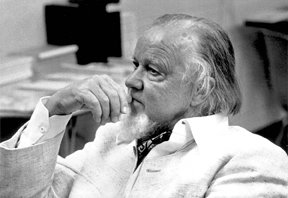
Vor 30 Jahren (am 15. Mai 1984) ist Francis August Schaeffer gestorben. Heute hört man relativ selten von ihm. Und doch war er ein Mann, der wie kaum ein Anderer die Menschen seiner Zeit kannte und liebte. Wer war denn dieser Francis Schaeffer? Was hat ihn zu dem Menschen gemacht, der er war? Und: Was kann er unserer Zeit lehren, was uns verloren gegangen ist? Diesen und vielen weiteren Fragen wollen wir nachgehen. Heute, 30 Jahre nach seinem Tod, können wir vieles sehen, was Schaeffer uns geradezu prophetisch vorausgesagt hat. Mit seinem Tod ist eine schmerzliche Lücke entstanden, die so einfach niemand füllen kann. Zugleich hat er uns aber auch einen reichen Schatz an Schriften hinterlassen, die es absolut wert sind, immer wieder gelesen zu werden. Nicht nur gelesen, vor allem auch gelebt. Francis Schaeffer war ein Mann, dem das Zusammenspiel von Glauben und Tun ganz besonders wichtig war. Er nahm die Menschen ernst, er lebte ihnen vor, was er predigte. So war sein „Missionswerk“ L’Abri (französisch für „die Zuflucht“) ein reines Glaubenswerk. Er schrieb keine Bettelbriefe, sondern erbat sich das fürs Leben Notwendige direkt bei Gott – und er bekam es. Wir wollen in den folgenden Seiten das Leben von Schaeffer und seine Botschaft an unsere Zeit betrachten. Möge dieser Mann uns ermutigen, ein echtes, authentisches Leben zu führen, durch welches die Menschen die Kraft und Wahrheit Gottes erkennen können.

Hier geht es zum Text von Jonas: schaeffer.pdf.

Francis Schaeffer zum 100. Geburtstag

Das Magazin Credo hat die Oktober-Ausgabe Francis Schaeffer (1912–1984)  gewidmet. Dabei sind Artikel von Bruce Little, William Edgar, Bryan A. Follis und Stephen Wellum.

The year 2012 is the 100th anniversary of the birth of Francis Schaeffer (1912–1984). It is difficult to think of an evangelical figure in the 20th century who so seriously engaged the philosophies and ideologies of the secular world and set them over against the Christian worldview than Francis Schaeffer.

But Schaeffer was no ordinary evangelical. The man wore knickers and knee high socks when he lectured, sporting not only long hair but a goat’s-chin beard! Most importantly, Schaeffer did not fear man, but feared God. Not only did he engage secular worldviews, but he confronted his fellow evangelicals, even rebuking them for doctrinal concession and compromise.

As many have observed, it is not an overstatement to say that the Schaeffers transformed, reshaped, and in many ways reformed American evangelicalism. Those writing in this new issue of Credo Magazine are proof, each writer bearing testimony to how Francis Schaeffer has made a monumental impact on how we understand and articulate the Christian faith and life in the world of ideas. Contributors include Bruce Little, William Edgar, Bryan Follis, and Stephen Wellum, and many others.

Hier gibt es einen Download gratis: www.credomag.com.

Interview mit Franky Schaeffer

Paul Edwards hat kürzlich am Telefon mit Franky Schaeffer gesprochen. Franky hat schon vor 30 Jahren darauf hingewiesen, dass die Evangelikalen in Nordamerika Teil der Unterhaltungsindustrie zu werden drohen. In diesem aktuellen Interview, dass sich vor allem um das Thema »Kunst« dreht (Anlass ist der Anschlag auf Andres Serranos »Piss Christ«), unterstreicht er seine scharfe Kritik.

Hier geht’s zum Interview (Audiomitschnitt unten): www.godandculture.com.

Francis Schaeffer in Lausanne 1974

Auf dem Internationalen Kongress für Weltevangelisation hielt Francis Schaeffer 1974 einen Vortrag von historischer Tragweite (erschienen als: Francis A. Schaeffer, Unsere Welt soll sein Wort hören, 1975, Original: Two Contents, Two Realities, 1974). Schaeffer klagte einerseits über das sich damals schon schwindende Vertrauen in die Glaubwürdigkeit der Heiligen Schrift, andererseits über den Lebensstil der Mittelklasse, der so etwas wie eine Norm innerhalb der evangelikalen Szene geworden ist.

Hier ein kurzer Mitschnitt:

VD: JO

Francis Schaeffer: A Mind and Heart for God

51uvweuE1gL._SL110_.jpgMark P. Ryan schreibt in einer Rezension über das gerade erschienen Buch:

  • Bruce A. Little (Hg.): Francis Schaeffer: A Mind and Heart for God, Phillipsburg: Presbyterian & Reformed, 2010. 132 S., ca. 10 Euro:

For a short book, Francis Schaeffer: A Mind and Heart for God covers a lot of valuable ground. It provides a compelling portrait of schaeffer as churchman, evangelist, deep-thinker, and a most compassionate individual. it offers important vantage points from which to view schaeffer’s ministry, especially his remarkable ability to convey biblical truth to so many whether Christian or not. it shows an awareness of schaeffer’s legacy beyond L’Abri and beyond formal ministries dedicated to apologetics and outreach. And more than simply looking backwards, this volume explores ways in which schaeffer might aid Christians today in holding out the gospel to a lost and decaying culture. Of course, the book’s strength (covering so much so briefly) is also its Achilles heel. Although this compact volume must certainly be considered a vital resource for understanding schaeffer and his legacy, it is not a “stand alone” resource. to understand schaeffer the man, one will still need to read Colin duriez’s biography: Francis Schaeffer: An Authentic Life (Crossway, 2008). similarly, to appreciate Schaeffer’s apologetic, one will need to read Bryan Follis, Truth With Love: The Apologetics of Francis Schaeffer (Crossway, 2006). As is always the case, one will also need to read schaeffer himself! Ultimately, one must judge a volume against its own intended aims and purposes. Far from attempting comprehensiveness, this book and the conference that gave rise to its contents intends to acquaint a generation of evangelicals unfamiliar with schaeffer with his life and ministry while promoting schaeffer’s emphases and approach as a model of cultural engagement that is both relevant and simultaneously faithful to the Christian gospel. weighed in these scales, this short, accessible, and thoroughly enjoyable volume succeeds on both counts. i hope many read this and are aided in developing their own mind and heart for God.

Das Buch kann hier bestellt werden:

Edith und Francis Schaeffer im Interview (1)

Franky Schaeffer hat Anfang der 80-er Jahre eine Interviewreihe mit seinen Eltern Edith und Francis Schaeffer erstellt. In dem nachfolgenden Teil sprechen sie über das Thema „Leid und Krankheit“. Thematisiert wird nicht nur eine überrealisierte Eschatologie (Gott heilt uns immer, wenn wir nur genug Glauben aufbringen), sondern auch der Umgang mit Franky‘s und Francis’ schweren Erkrankungen.

Fragen & Antworten mit Francis und Edith Schaeffer

Der christliche Apologet Francis Schaeffer starb am 15. Mai 1984. Jetzt sind Videoaufnahmen vom März 1984 aufgetaucht und zur Verfügung gestellt worden. Schaeffer spricht in dieser Runde mit  Fragen & Antworten über seine schwere Erkrankung, über den Niedergang des Evangelikalismus (vgl. Die große Anpassung) und die Notwendigkeit der Evangelisation. Edith spricht zum Beispiel über die Wichtigkeit, die Kinder gut zu unterweisen.

Was Schaeffer über den Evangelikalismus sagt, ist so unvorstellbar aktuell, dass ich es erst nicht glauben wollte. Besonders seine Anmerkungen zur Methodologie und zum – wie wir heute sagen würden – postmodernen Wahrheitsverständnis, sind auffallend gegenwartsnah.

[asa]3893972668[/asa]

Francis Schaeffer: Ein authentisches Leben

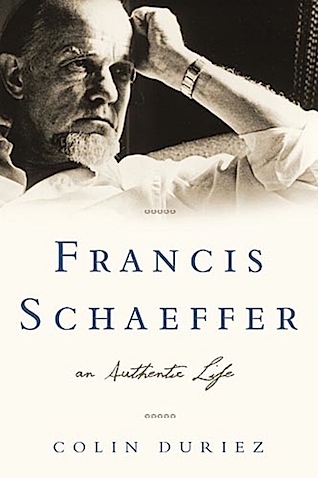
9781581348576.jpgCrossway wird am 30. Juni eine neue Biografie über Francis Schaeffer auf den Markt bringen. Der Autor Collin Duriez hat bereits ein renommiertes Werk über C. S. Lewis verfasst. Das mit Spannung erwartete Buch wird die bisher erste autorisierte Biografie über Schaeffer sein.

Der Verlag schreibt:

A monumental work that draws on specially collected oral history to fully portray the person, work, and teaching of one of the most important figures in modern Christianity.

Nearly twenty-five years after his death, Francis Schaeffer’s impact as one of the foremost shapers of modern Christianity still reverberates within the church and contemporary culture. A pastor, apologist, best-selling author, and activist whose work and ministry reached around the world, Schaeffer also managed to deeply and personally influence people of every age and position—men, women, youth, and children; the schooled intellectual and the common laborer, the scientist and the artist, the doubting Christian and the skeptical non-believer—in a way that few others have.

His impassioned, genuine life is the focus of Colin Duriez’s authoritative biography, which draws on over 150,000 words of oral history in addition to personal interviews and other resources to portray not just the man and his relationships but his spiritual formation and the development of his ideas, creative works, and worldview.

From his working-class childhood in Pennsylvania, to the founding of L’Abri, his personal crisis of faith, and his latter years as a compassionate controversialist in the worldwide spotlight, all the eras of Schaeffer’s life unfold within these pages. But Duriez, who studied under and interviewed Schaeffer, also takes a deeper look, revealing those distinct life phases, as well as Schaeffer’s teachings and his complexities as a person, within their historical context so that contemporary readers may better understand all of who Schaeffer was—and why he still matters today.

Filling an important void in Schaeffer literature, this full-length biography illuminates the complex journey of one whose relentless passion for truth, reality, a full-orbed faith, and meeting the needs of people made him not just a giant within evangelicalism but a shining example of what every Christian in every generation strives after: An Authentic Life lived to the glory of God.

Das Buch kann bei Bol.de bereits vorbestellt werden: www.bol.de.
Edith Rachel Merritt Seville Schaeffer

Die New York Times hat einen kurzen Nachruf für Edith Schaeffer (1914–2013) veröffentlicht. Die Worten stammen von Deborah Middelmann-Schaeffer.

Mrs. Edith Rachel Merritt Seville Schaeffer, born in Wenchow, China on November 3, 1914, died in her home in Gryon, Switzerland, the night of Good Friday to Holy Saturday March 29/30, 2013. Contrary to erroneous reports she had lived in her lovely chalet built in 1683 in Gryon for 13 years, where she longed to live and die, surrounded with the beloved witnesses of her rich life: her Steinway baby grand Piano, her dozens of paintings by her son Frank, her gorgeous antiques and linen drapes.

All these precious things surrounded her as she so hoped, on the night she talked with her son-in-law and pastor Udo Middelmann about the resurrection with fresh flowers next to her, watched a concert on BBC Four TV with delight, fell asleep and never woke on Holy Saturday. She will, we know, be raised as God promised, from her burial place next to her husband Francis Schaeffer in Rochester MN.

Hier: www.legacy.com.

Nach oben scrollen
DSGVO Cookie Consent mit Real Cookie Banner