Ein Evangelium in der ganzen Schrift
Dane Ortlund hat in seinem Blog Bücher für eine christuszentrierte Bibellektüre empfohlen. Die Liste ist so gut, dass ich sie hier komplett wiedergebe (in deutscher Sprache ist m.W. nur das Buch von Vaughan Roberts (siehe dazu hier) und die Kinderbibel von Sally Lloyd-Jones erhältlich. Wer mehr weiß, kann mittels Kommentarfunktion gern ergänzen.):
T. Desmond Alexander
- The Servant King: The Bible’s Portrait of the Messiah, Regent College Press, 2003. 172 S.
- From Eden to the New Jerusalem: An Introduction to Biblical Theology, Kregel, 2009. 208 S.
G. K. Beale
- A New Testament Biblical Theology: Transformation of the Old Testament in the New, Baker, 2011. 992 S.
- »The Eschatological Conception of New Testament Theology,« In The Reader Must Understand: Eschatology in Bible and Theology, Edited by K. E Browner and M. W. Elliot. InterVarsity, 1997. 60 S.
D. A. Carson
- The God Who Is There: Finding Your Place in the Story, Baker, 2010. 240 S.
Bryan Chapell
- Christ-Centered Preaching: Redeeming the Expository Sermon, 2d ed. Baker, 2005. 400 S. Note especially chapters 10 and 11.
Roy Ciampa
- »The History of Redemption,« In Central Themes in Biblical Theology: Mapping Unity in Diversity, Edited by Scott J. Hafemann and Paul R. House. Baker, 2007. 50 S.
Edmund Clowney
- Preaching Christ in All of Scripture, Crossway, 2003. 192 S.
- The Unfolding Mystery: Discovering Christ in the Old Testament, Presbyterian & Reformed, 1991. 208 S.
Stephen Dempster
- Dominion and Dynasty: A Biblical Theology of the Hebrew Bible, InterVarsity: 2003. 267 S.
William Dumbrell
- The End of the Beginning: Revelation 21–22 and the Old Testament, Wipf & Stock: 2001. 216 S.
Graeme Goldsworthy
- According to Plan: The Unfolding Revelation of God in the Bible, InterVarsity, 2002. 251 S.
- The Goldsworthy Trilogy (Gospel and Kingdom, Gospel and Wisdom, The Gospel in Revelation), Paternoster, 2001. 586 S. (esp. Gospel and Kingdom)
- Gospel-Centered Hermeneutics: Foundations and Principles of Evangelical Biblical Interpretation, InterVarsity, 2007. 341 S.
- Preaching the Whole Bible as Christian Scripture: The Application of Biblical Theology to Expository Preaching, Eerdmans, 2000. 287 S.
Sidney Greidanus
- Preaching Christ from the Old Testament: A Contemporary Hermeneutical Method, Eerdmans, 1999. 392 S.
Dennis E. Johnson
- Him We Proclaim: Preaching Christ from All the Scriptures, Presbyterian & Reformed, 2007. 494 S.
Sally Lloyd-Jones
- The Jesus Storybook Bible: Every Story Whispers His Name, Zondervan, 2007. 352 S.
Vaughan Roberts
- God’s Big Picture: Tracing the Storyline of the Bible, InterVarsity, 2003. 160 S.
O. Palmer Robertson
- The Christ of the Covenants, Presbyterian & Reformed, 1981. 308 S.
Colin Smith
- The Plan, TGC Booklets. Crossway, 2011. 30 S.
Michael Williams
- Far as the Curse is Found: The Covenant Story of Redemption, Presbyterian & Reformed, 2005. 319 S.
Christopher J. H. Wright
- Knowing Jesus through the Old Testament, InterVarsity, 1992. 256 S.
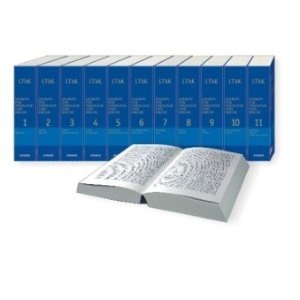 Das Nachschlagewerk Lexikon für Theologie und Kirche ist ein wichtiges Referenzwerk in Fragen der katholischen Theologie.

 Erfreulicherweise hat die SMD anlässlich ihres 60. Geburtstages im Jahr 2009 John Stotts wichtigstes Buch in deutscher Sprache bei der Francke-Buchhandlung publiziert. Das von Christian Rendel hervorragend übersetzte Werk:

 Folgt man dem Alltagsgeschwätz, verbreiteten Lehrbüchern der Philosophie oder der Demagogie des »Neuen Atheismus«, sind seit Immanuel Kant die theoretischen Gottesbeweise erledigt. Kant hatte Gottesbeweise als ehrsüchtige Absichten eingestuft und in den Bereich der über die Grenzen aller Erfahrung hinausgehenden spekulativen Vernunft verwiesen (I. Kant, Kant-W., Bd. 4, S. 693). Niemand, so der akademische Standpunkt mit und nach Kant, würde sich mehr »rühmen können: er wisse, dass ein Gott« sei ( I. Kant, Kant-W, Bd. 4, S. 693.). »Wer die Theologie, sowohl diejenige des christlichen Glaubens als auch diejenige der Philosophie, aus gewachsener Herkunft erfahren hat, zieht es heute vor, im Bereich des Denkens von Gott zu schweigen«, hat uns Martin Heidegger gesagt (zitiert nach Wilhelm Weischedel, Der Gott der Philosophen, Bd. 2, S. 280). Selbst der durchaus »offene« Logiker Franz von Kutschera kommt nach ausführlicher Analyse der bekannten Gottesbeweise zu dem Resümee: »Es gibt zumindest gegenwärtig keinen brauchbaren rationalen Gottesbeweis« (Franz von Kutschera, Vernunft und Glaube, Berlin; New York: de Gruyter, 1991, S. 41).
 Der britische Historiker Niall Ferguson stellt sich die Frage, wie es dazu kommen konnte, dass der Westen die anderen großen Zivilisationen überholen und zeitweise dominieren konnte.
 Unsere Welt ist eine Götzenfabrik. Die Götzen verzaubern unsere Sinne und unseren Verstand. Wir dienen ihnen gern. Ergeben opfern wir ihnen unser Leben.