Bücher

Velvet Elvis

Gestern lag wieder Werbung für den Jugendplus-Kongress 2011 mit Rob Bell im Briefkasten (Willow Creek Deutschland). In einer Rezension über Bells Velvet Elvis schreibt Greg Gilbert (9Marks):

For example, take Bell’s reconception of the idea of doctrine. Bell argues that the doctrines of Christianity should be thought of as the „springs“ that hold up the trampoline on which we jump and live in Christ. The springs are not the main point; they merely facilitate the greater goal of „us finding our lives in God“ (25). Now that analogy has some truth to it. But it’s also more dangerous than it might first appear. Conceiving of Christian doctrines as springs allows Bell to say that getting the doctrines right is not really that important. If you don’t like one or two of the springs, you can just take them out of the trampoline and keep on jumping.

Here is Bell’s take on the doctrine of the Trinity, for instance: „It is a spring, and people jumped for thousands of years without it. It was added later. We can take it out and examine it. Discuss it, probe it, question it. It flexes, and it stretches“ (22). And what about Christ’s birth to a virgin? Bell asks, „What if that spring was seriously questioned? Could a person keep jumping? Could a person still love God? Could you still be a Christian?“ (26).

Bell affirms his belief in both the Trinity and the Virgin Birth, but he also says he wants to carve out some room to „question“ those doctrines.

But what does he mean by that? Is he saying that one can study them, ask questions of them, learn from them? I wish he was. Yet why does Bell even pose the question? Why does he ask, „Could a person keep jumping?“ and then not answer it? I can only conclude that Bell is saying that it wouldn’t matter very much if someone stopped affirming them. „Yes, of course you can keep jumping, even if you stop believing in the Trinity or the Virgin Birth.“

Hier die vollständige Rezension: www.9marks.org.

Fallobst im Frühjahr

Der Artikel von Felicitas von Lovenberg vermittelt Einblicke in das Verlagswesen und die Übersetzungsvergütung. Interessant:

Dabei darf man nicht vergessen, dass die Verlage überhaupt nur mit maximal zehn Prozent der belletristischen Buchtitel überhaupt einen Gewinn erzielen – und dass diese Umsätze bei allen Häusern in erster Linie mit Unterhaltungstiteln generiert werden.

Und:

Die Suche nach einer Vergütungsregel, welche die Verlage nicht schröpft, aber die Übersetzer dennoch signifikant besser stellt, geht noch jemanden an: den Leser. Seit Jahren hinkt die Entwicklung der Buchpreise denen für Herstellung und Vertrieb hinterher; die magische Grenzen von zwanzig Euro müsste eigentlich öfter überschritten werden. Auch deswegen müssten übersetzte Bücher mehr kosten.

Eine Lösung der Übersetzerhonorierung ist auch deshalb dringend nötig, weil das nächste Problem bereits vor der Tür steht: Der Onlinebuchhändler Amazon hat am Wochenende bekanntgegeben, 2010 in Amerika erstmals mehr E-Books als Taschenbücher verkauft zu haben. Wenn die E-Books der Zukunft die Taschenbücher der Vergangenheit ersetzen und die Taschenbücher von heute das anspruchsvolle Hardcover-Programm von morgen – wo bleibt dann der Leser, der von einem Buch mehr erwartet als nur gute Unterhaltung?

Hier: www.faz.net.

Ethics for a Brave New World

Die Brüder John und Paul Feinberg haben 1993 das Buch Ethics for a Brave New World herausgegeben. Nun wurde das empfehlenswerte Werk neu aufgelegt. John Kilner schreibt zum Buch:

Since the first edition, changes in the world have only made this book’s title more apt. Again and again, science fiction has become science fact; and with masterful theological discernment, Ethics for a Brave New World helps us to make sense of what is happening. It does a tremendous service by gathering and interpreting an ocean of literature on key issues of our day. Readers will come away informed about the issues, conversant with the multifaceted debates that swirl around these vital challenges, and equipped and inspired to engage them in a way that glorifies God.

Hier Inhaltsverzeichnis und Vorwort zur erweiterten Auflage: ethics-for-a-brave-new-world-download.pdf.

Justin Taylor hat mit dem Theologen John Feinberg über das Buch gesprochen:

Das Buch kann hier bestellt werden:

„Neuer Calvinismus“: Bücher mit Einfluss

Kevin DeYoung hat eine Liste mit Literatur zusammengestellt, die in den Kreisen des »Neuen Calvinismus« beliebt und verbreitet ist. Ich gebe die Liste hier wieder und habe, soweit mir bekannt, Übersetzungen verlinkt.

  1. John Piper: Sehnsucht nach Gott
  2. Wayne Grudem: Systematic Theology (Anmerkung: Das Buch wird derzeit in einer deutschen Übersetzung lektoriert. Wir dürfen hoffen, dass es 2011 in deutscher Sprache erscheinen wird.)
  3. J.I. Packer: Gott erkennen
  4. C.S. Lewis: Pardon, ich bin Christ
  5. John Piper: Dein Leben ist einmalig
  6. R.C. Sproul: Die Heiligkeit Gottes
  7. Jerry Bridges: Disciplines of Grace
  8. C.J. Mahaney: Cross-Centered Life
  9. Mark Driscoll and Gary Breshears: Doctrine
  10. Sonstige: R.C. Sproul: Chosen by God; John Piper: God is the Gospel; Joshua Harris: Dug Down Deep; Francis Chan: Mein Leben als Volltreffer: wen(n) Gottes geniale Liebe antreibt; David Platt: Radical

Interview mit Michael Horton

John Starke hat mit Michael Horton über seine Systematische Theologie gesprochen. Horton über seine Intention:

God’s people have profited tremendously from these contemporary systems. I wanted to offer a summary of the Christian faith from a confessional Reformed perspective, interacting with contemporary biblical scholarship and some of the more recent questions that have been raised both within and outside of the tradition. Robert Reymond’s fine work explores the richness of Reformed theology, though I have some differences that I mention, mostly in a footnote here or there. But, like Reymond, I wanted to show how Reformed teaching holds together, not just on some topics (like sin and grace), but as an attempt to articulate the broader system of faith and practice.

Mehr Informationen über sein neustes Buch gibt es hier. Das vollständige Interview gibt es bei der TGC: tgcreviews.com.

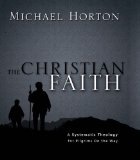
Der christliche Glaube – Systematische Theologie von M. Horton

41hpuOkrM7L._SL160_.jpgIch weiß nicht, ob so ein ›prophetischer‹ Satz von Zondervan über Michael Hortons Systematische Theology klug ist.

Michael Horton’s highly anticipated The Christian Faith represents his magnum opus and will be viewed as one of—if not the—most important systematic theologies since Louis Berkhof wrote his in 1932.

Das Buch ist jedenfalls gesetzt und wird Ende Januar bis Anfang Februar erscheinen. Hier schon einmal ein Blick auf das Inhaltsverzeichnis und die ersten Seiten: 0310286042_samptxt.pdf.

Nach oben scrollen
DSGVO Cookie Consent mit Real Cookie Banner