N.T. Wright: Wie Gott König wurde
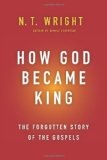 In seinem neusten Buch How God Became King: The Forgotten Story of the Gospels votiert N.T. Wright für ein radikales Überdenken des Evangeliums. „Seit Jahren habe ich zunehmend den Eindruck, dass der Großteil der westlichen christlichen Tradition einfach vergessen hat, was die Evangelien sind“ (S. vii), schreibt er in dem für ihn charakteristisch selbstsicheren Stil. Wo liegt das Problem? Während die Glaubensbekenntnisse den Schwerpunkt darauf legen, dass Jesus Gott ist, zeigen die Evangelien, wie Gott König wird (vgl. S. 20). Es gilt, die politische Dimension des Evangeliums zu entdecken. Wright wird sehr politisch. Warum mussten wir bloß 2000 Jahre warten, bis endlich jemand erklärt, wie das Evangelium zu verstehen ist?
Matthew Barrett und Michael A.G. Haykin schreiben in ihrer Rezension:
God’s kingdom is not only in heaven but on earth. Therefore, Christianity cannot be just a religion. At the climax of his argument is this simple truth: first-century Jews would have balked at the separation of church and state. Consequently, though this is a word many fear, Wright believes we need to resurrect the word theocracy if we are to make proper sense of the Gospels and the reign of King Jesus on earth. Wright says, “It is, of course, the absence of any equivalent to Temple or Torah in our contemporary culture that makes our own way of posing the political questions so very different from those of the Jews of Jesus’s day” (173). And again, “Theocracy, a genuine Israel-style theocracy, will occur only when the other ‘lords’ have been overthrown” (206). A “new empire,” a “new theocracy” has been inaugurated that trumps Caesar’s empire. Exactly what this theocracy should look like, however, is undefined. Wright is clear, however, that it has no barriers between church and state and no government that bears the sword. But the divine right of rulers is reinstated.
…
In other words, for Wright the cross is not so much about vicarious substitution for the forgiveness of sins but bringing to earth social justice and a new and improved political agenda. “Those who are put right with God through the cross are to be putting-right people for the world. … From this there flows both a new missiology, including an integrated political theology, and the new ecclesiology that will be needed to support it, a community whose very heart will be forgiveness” (244). However, the NT never advocates such an “integrated political theology” supported by the church. To the contrary, the primary application of the cross is about “how to have your sins forgiven” (Acts 2:38). The gospel Christians proclaim to the nations is not a political one, but a message of salvation for sinners (Mark 16:15).
To conclude, Wright does a lot of blaming. The early church fathers, the orthodox creeds, evangelicals, democracy, Western Christianity, and others all get blamed for messing up Jesus. But fear not, Wright has come to the rescue after 2,000 years of misunderstanding and butchering Jesus to show us the true meaning of the life of Jesus that we have all missed. One begins to get the feeling by the end of the book that in Wright’s mind, everyone else has got it wrong. However, as this review has briefly sought to demonstrate, Wright’s way of looking at Jesus and the kingdom is not so much a return to the biblical text but the agenda of an Anglican churchman seeking to apply a political theology to the Gospel narratives.
Hier: thegospelcoalition.org.